








Group dynamics in business: how to motivate every type of person
Ron Willingham’s four types
In any team, different ways of understanding work and relationships coexist. When working through group dynamics and innovation processes, you will need to ‘sell’ in different ways to different types, so that each type sees benefits that they care about and interest them.
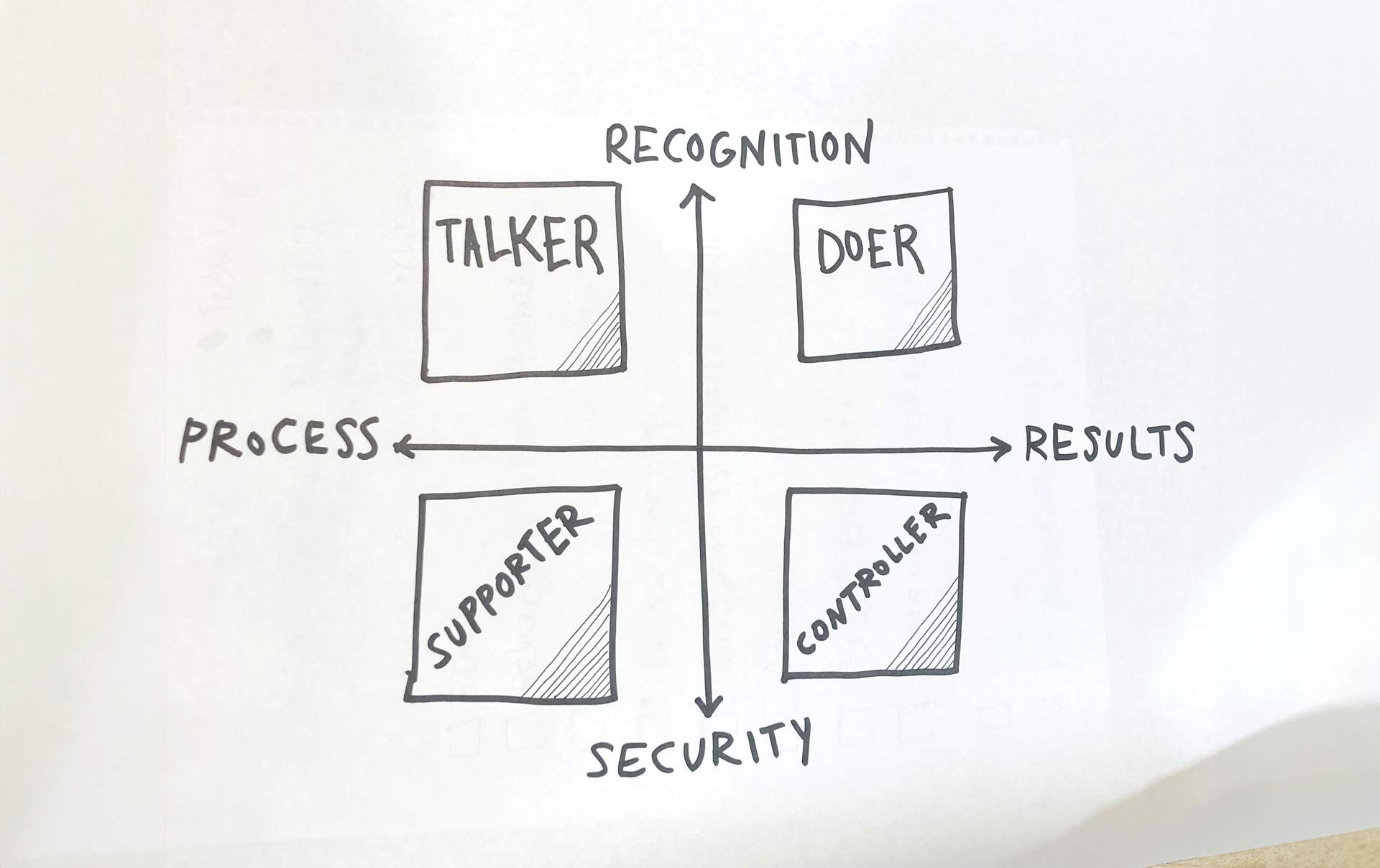
Integrity Selling , by Willingham,identifies four personalities that fall along two axes: guided by reputation or by security and focussed on process or result. The intersection of these factors create four very recognisable types:
- Doer: Someone guided by action and results. They care about reputation, both their own and that of the organisation and their team.
- Talker: A communicative and creative person focussed on experience and process as well as reputation.
- Supporter: Focussed on security, looking after teams and tasks, and the social environment. They need security and they focus on the process.
- Controller: A meticulous, analytical and results-oriented person, who cares about the security of the team when making decisions.
For HR or team leaders, understanding these different points of view and interests is key when encouraging participative training based on group dynamics, because it allows us to adapt messaging and make sure that everyone is encouraged to participate.
Convincing each type
The Doer: tangible results
Doers want facts, not theories. They will be convinced when they know that what they have learned will be applied from day one,improving productivity and optimising decision making.
What you can tell them: : “This training will give you the practical tools to achieve visible results starting tomorrow.”
The Talker: reputation and innovation
They are motivated by visibility, exchange and novelty. It will be more attractive for them to know that the training will allow them to demonstrate their creativity, contributing fresh ideas and shining in group interactions.
What you can tell them: You have a space here to express your ideas and motivate your whole team.”
The Supporter: cohesion and motivation
Supporters focus on the emotional environment and human relations. They will be convinced by the fact that training will strengthen relationships, generate cohesion and contribute to the well-being of the group, without risks.
Phrase to encourage participation: “This activity will help us to listen better and reinforce trust in the team.”
The Controller: method and clear processes
Controllers need structure and guarantees. They will take confidence from the fact that the training is based on proven methodology, with clear processes, defined goals and measurable results..
It will work to tell them: “This session will have a clear framework and we will measure our progress together so that you can see the results.”
The advantage of dynamic training for all types
As you will know, each type of person responds to a different argument, but group dynamics through participatory methodology offer a unique advantage: they respond to each of these motivations at the same time. It offers results for those that want action, visibility for those that want to express themselves, cohesion for those that value the team and clear processes for those that need security.
If you offer a training experience to improve soft skills and you manage to persuade people to attend, the main thing is that they find what they came looking for.
Would you like us to get to work, and design a practical training with creative tools that will actually fit each type of person?